


Civil defence is the one authority paperwork cannot satisfy — an inspector comes and looks. Which is why most refusals trace to decisions made during fit-out, not at filing.
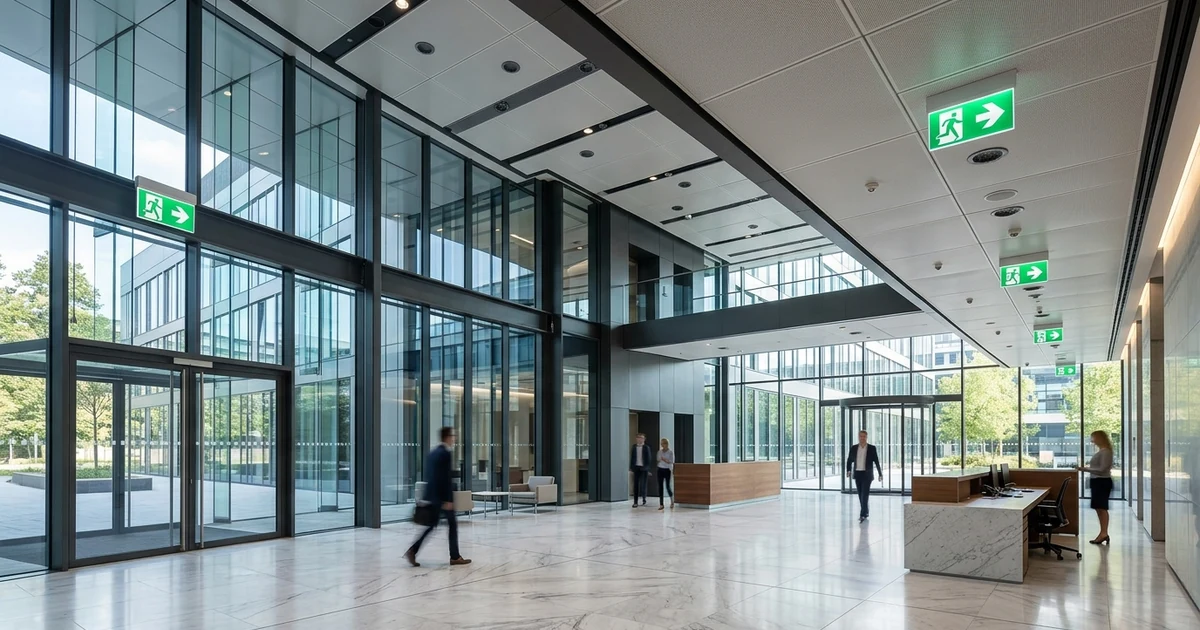
Of all the licences your premises need, civil defence is the only one a complete file cannot satisfy. An inspector visits, measures the corridor, checks that an emergency exit actually leads somewhere, and looks at whether the suppression system suits what you really store.
Which is why most refusals are not resolved by refiling — they are resolved by construction work. Work that could have been avoided entirely had the requirements been reviewed before fit-out rather than after.
Why the safety certificate matters more than it looks
Because it is not a standalone licence but a precondition for others. A municipal licence is neither issued nor renewed without a valid safety certificate, and the same holds for the industrial licence. Any lapse in safety stalls a whole chain.
And where a closure order is issued, safety is usually the cause rather than anything else. A closure order is only lifted after remediation and re-inspection — meaning every day of delay in fixing it is a full day of lost trading.
Requirements differ fundamentally by activity
The common mistake is assuming one set of requirements. The gap between an office, a warehouse and a restaurant is very wide:
- Offices: baseline requirements — extinguishers, alarm, clear exits, signage
- Restaurants and cafés: kitchen requirements, hood suppression systems and gas storage are added
- Warehouses: driven by stock type and stacking height; may require a full sprinkler network
- Factories: the strictest — detection and suppression specified to the materials and process risks
- Public-facing premises: occupancy load calculations governing exit count and width
The most common causes of refusal
Across the cases we handle, refusals recur for much the same reasons:
- An emergency exit that does not exist, or leads into an enclosed space
- Corridor or door widths below what the occupancy load requires
- A suppression system unsuited to the activity classification or stored materials
- No valid maintenance contract with an approved provider
- Flammable materials stored in a non-compliant manner or quantity
- Signage or emergency lighting not installed
The sequence that saves you rework
The single most useful piece of advice here: review the requirements before fit-out, not after.
Decisions such as where the emergency exit sits, how wide the corridors are, and where the electrical room goes are made at design stage. Changing them after fit-out means demolition and rework at a cost far exceeding an upfront review.
If you are still choosing premises, take the requirements with you to the viewing. If fit-out has started, pause what can be paused and review before continuing.
How safety connects to your other licences
The safety certificate is not a separate document filed away. It is a link in a chain: the municipal licence requires it, the industrial licence requires it, and renewing either depends on it being valid.
What that means in practice is that letting the certificate lapse produces no immediate visible effect — the effect surfaces months later when a municipal licence renewal is refused and you discover you have been trading in a deficient position the whole time.
We therefore recommend keeping four dates in one schedule: commercial registration, municipal licence, safety certificate, and the environmental permit where your activity is classified. Tracking them together is far easier than chasing each one as it expires.
How the process runs on the Salama platform
In practice:
- Assemble documents: commercial registration, documented lease, layouts, system specifications
- File through Salama, specifying activity type and floor area
- Book the site inspection
- Inspection: the inspector attends and records observations if any
- Remediation and re-inspection if needed, then certificate issuance
Frequently asked questions
How long does a safety certificate take?
One to four weeks where the site already complies. But if observations require construction work, the timeline is set by how long that work takes, not by the procedure itself.
Is a maintenance contract required?
Yes, and systems present without a valid maintenance contract from an approved provider is a recurring cause of failed inspections. Systems must be installed, functional and demonstrably maintained.
A closure order was issued against my premises — what now?
Identify the observations precisely, complete the remediation, and request re-inspection immediately. Every day of delay is a day closed. We treat these as priority cases because the cost accrues daily.
Do I need an accredited engineering office?
It depends on the premises type and size. Large and high-risk facilities require drawings and reports from an accredited engineering office, while smaller premises may be satisfied with basic layouts.