


The industrial licence is not the last form in your factory file — it is what unlocks industrial city land, financing and customs exemptions. The full guide to requirements and the right order of steps.
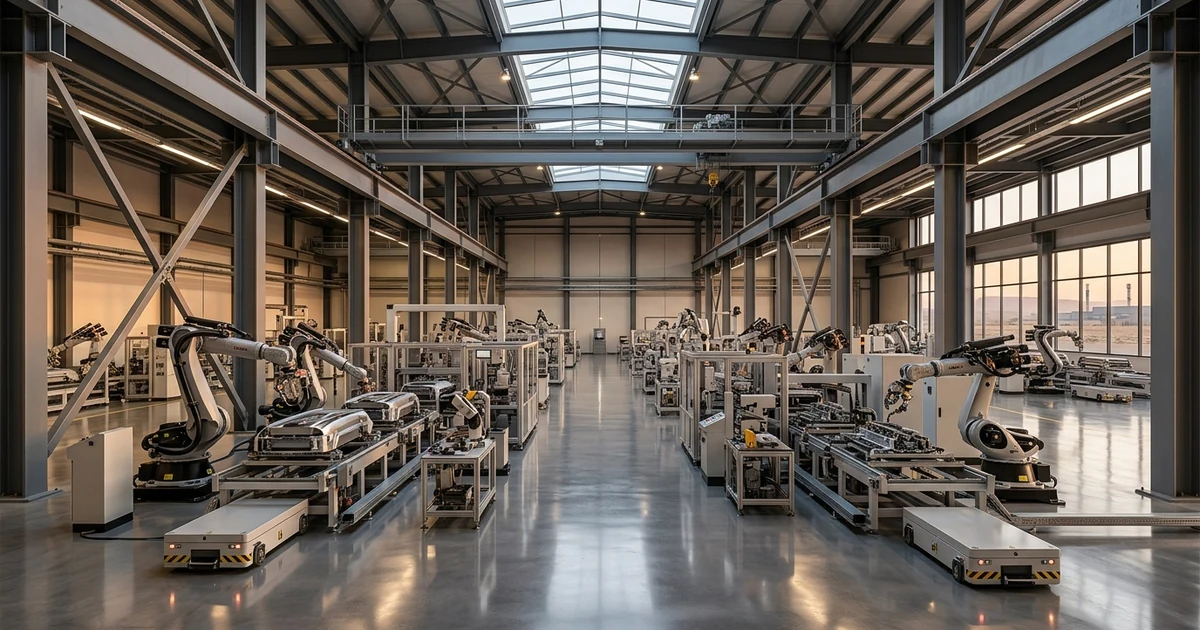
What derails industrial projects in Saudi Arabia is rarely the difficulty of the industrial licence itself — it is the order of the steps. Many investors sign a land contract and import production lines, then discover their activity is not environmentally permitted at that site, or that the environmental classification requires an impact assessment taking months nobody budgeted for.
This guide explains the industrial licence as it actually runs: what it is, who needs it, what must come before it, and the benefits it unlocks. And most importantly, the sequence that saves you months and losses.
What the industrial licence is, and who needs one
The industrial licence is issued by the Ministry of Industry and Mineral Resources and authorises an establishment to carry out industrial or manufacturing activity in the Kingdom. It covers manufacturing, processing, assembly and packaging — not only heavy industry, as is commonly assumed.
Any activity that converts a raw or semi-finished material into a different product generally falls within the industrial scope. An assembly workshop, a food packaging plant or a plastics line all require an industrial licence, however small the footprint.
The practical distinction: a commercial registration alone is not enough. The registration lets you trade; the industrial licence is what permits actual manufacturing and opens the benefits attached to it.
The benefits the licence unlocks
The licence is not merely a regulatory burden — it is a gateway to tangible financial advantages many investors overlook:
- Land in industrial cities (MODON) at preferential lease rates well below the commercial market
- Eligibility for Saudi Industrial Development Fund financing on concessional terms and long repayment periods
- Customs exemptions on equipment, production lines and manufacturing inputs unavailable locally
- Preference in government tenders and procurement under local content programmes
- Access to work visas within quotas reserved for industrial establishments
The right sequence: what comes before the industrial licence
This is where the costliest mistake happens. The industrial licence depends on the outputs of other procedures, and running them out of order means rework or forfeited financial commitments.
The practical sequence we recommend:
- First: establish your activity's environmental classification — it determines whether you need simple environmental registration or an impact assessment taking months
- Second: check site suitability before signing any contract — some activities cannot be licensed at certain locations regardless of what else you satisfy
- Third: commercial registration including the industrial activity under the correct code
- Fourth: the environmental permit from the National Center for Environmental Compliance
- Fifth: civil defence and safety requirements for the site
- Sixth: file the industrial licence application with the Ministry of Industry
Documents required
The file varies slightly by activity and scale, but the core is consistent:
- Commercial registration including the industrial activity
- Technical project study covering production lines and target capacity
- Land or industrial site contract and proof of right to use it
- Environmental approval from the competent authority
- Factory layouts and civil defence and safety requirements
- Equipment and production line list with sources
Expected timeline and causes of delay
The industrial licence itself can issue within weeks once the file is complete. But real elapsed time from project concept to licence typically runs one to three months, governed by the environmental side more than any other factor.
The most common causes of delay: an environmental classification requiring an impact assessment that was not started early, an unsuitable site discovered after contracting, or an activity registered under a code that does not match the actual industrial activity.
After the licence is issued
The licence is not the end of the road. It must be renewed before expiry, amended when adding a production line or changing capacity, and supported by a valid environmental permit and safety certificate — because a lapse in either reflects back on the industrial licence itself.
We recommend keeping all four critical dates in one schedule: commercial registration, industrial licence, environmental permit and safety certificate. A lapse in any one stops the whole chain.
Frequently asked questions
Can operations start before the industrial licence is issued?
No. Operating before issuance is a violation exposing you to fines and closure. During the waiting period you may complete fit-out, install equipment and import inputs, short of actual production.
Must I own the land?
Ownership is not required, but you must demonstrate a right to the site — through a lease in an industrial city or a location zoned for industrial activity. An unsuitable site is among the most common causes of refusal.
What does an industrial licence cost?
The licence fee itself is not the largest cost element. The heavier cost is usually what precedes it: an environmental impact assessment where required, and safety remediation works at the site. Knowing your environmental classification early is what lets you estimate the real cost.
Can a foreign investor obtain an industrial licence?
Yes — first by obtaining an industrial investment licence from the Ministry of Investment (MISA), then issuing the commercial registration on that basis, then the industrial licence. Full foreign ownership is available across most industrial activities.